 I recently cleaned out my closet and donated eleven large sacks of clothes and shoes to an NGO that assists Venezuelans in Peru, Union for Venezuelans in Peru. If you want to donate, call the executive director, Martha, 992-824-991, and she will meet you at the Union for Venezuelans in Peru at Avenida Benavides 3082, which is actually located on the Ovalo Higuereta, in Surco. The building is not marked as the Union has not spent money on signage (the employees wore white work shirts with the name of the organization on them). The office is on the third floor but it was not open yet when I made my delivery. The Union for Venezuelans in Peru will also pick up.
When I chatted with Martha, she explained that the refugees are in need of everything as they arrive only with what they can carry in their hands. She said that many are young families. She told us about a family that were happy as they picked up an inflatable mattress. Makes one think.
In the last few years, nearly a million Venezuelan refugees have arrived in Peru. Thirty years ago, Peruvians were fleeing to Venezuela and not the situation is reverse. Peru is currently in the honeymoon phase of this reverse situation and the Peruvians are welcoming the Venezuelans with resident permits and work permits. Many work as taxi drivers, in restaurants, and some sell candy to make a bit of income (I know one shop owner who gives the candy for free the first time around so that the refugee can build a bit of capital — like the Grameen system — although this shop owner will probably not get a Nobel prize. He does it for the humanity of the situation). I have seen Peruvians buy these candies out of an act of charity, much in the vein of “there but for the grace of God, go I.”
 In many of the shops and restaurants, the workers are Venezuelans. They have the advantage that they speak the local language. When I was in Port of Spain, many of the workers were Venezuelans (Trinidad is only a few miles off the coast of Venezuela). This proximity means that many Trinis speak Spanish as well. I actually understood the Spanish better than the Trini form of English when in Trinidad.
Here in Lima, due to the influx of Venezuelans, there are more and more Venezuelan eateries. When I lived in Caracas, I developed a taste for arepas and now I can find good ones here as well. I did not get some after the trip to donate clothes. I had enough food for thought.
 Dhaasu=buenazo=awesome! Really, that is the definition of the name (“DAW-ah-sooo” is my best guess).
  Apparently, in Arequipa, there is an Indian guy named Roy who has a restaurant named “India Indian” — just to make clear that the food is Indian. In Peru, the term for Indian food is “comida hindu.” In Lima, there are four restaurants claiming to be this kind of food: Dhaasu opened in just recently (
 Dhaasu is a hole-in-the-wall or huarique (Peruvian term for a hole-in-the-wall) with eight stools. No tables, no tablecloths, no reservations. Dhaasu translates to “effing awesome” or “buenazo” in Peruvian Spanish. It describes how delicious the food is at this newly opened eatery run by Rish and Camilla. They both speak English and Spanish, the chef has over ten years of experience from cooking in Delhi, and yes, there are vegetarian versions of everything. Currently, the menu is a few types of wrap sandwiches and curries. Those words are pitiful descriptions of the yummy spicy (but not spicy) meat in masala sauce (or curry by another name), the warm and fresh baked flatbread (naan) sandwiches wrapped around tender, marinated, caramelized juicy meat…
  Rish comes from a family of restaurant owners and Dhaasu is just the beginning of his empire. Dhaasu uses biodegradable containers and utensils for those who feel better knowing this. I plan to take my own lunchboxes next time and load up.
 Rish plans to expand, take his tandoor on the road, cater, and can he hurry up already? Speaking of India food, I asked about dosa which is from south India. Rish said that he had a friend who was thinking about this too… Here’s to the rise of the Indian Indian food in Lima!

 Vegan food in Lima? Yes, apparently. I asked some vegans for their list of places to eat. This blog posting is cribbed off of their list (though, I think you can ask at any place and then can probably make it vegan for you.)
 San Borja:
 Here they are called “bioferia” or “ecoferia” and as far as I can tell, there are only a few with a specific schedule. Most of them feature the same vendors, who keep move to different locations depending on the day.


 ****Updated address on May 29, 2021**** El Cacaotal has always been located on Jirón Colina, but it’s been in three locations. Currently, the address is Jirón Colina 111.
 AJ is an American anthropologist who did her graduate degree in chocolate! Then she opened up a shop to share the knowledge and help Peru’s chocolate field. Her shop is called El Cacaotal (cocoa field) and it’s decorated with dried cacao tree leaves and everything chocolate (or items in support of non-chocolate small entrepreneurs). The shop is located on Jirón Colina 111 in Barranco (two streets west from the Metro grocery store on Grau, down the street from a yellow corner building).
 I emailed to set up a class for seven of us (she can fit up to ten in a class). Her email is:
  Read a much more thorough article about her on
  In Peru, there is a


 Of course, there are many other fruits here like mango, pineapple, and mandarins, which are also delicious.

 Back to the food cart here in my barrio… I am not willing to try every street food cart in the world, but, when I see a crowd lined up waiting, I have to go over and see what they are eating. As you can see, this vendor doesn’t even need to move the cart out to the street. It just stays in her driveway.
 The other evening, I saw a crowd, again. So I went over to take photos. As you can see, they sell hotdogs, wings, breast, and mussels? Now, I just need to find someone who’s willing to try it…
 Folks told me that Lima’s Chinatown was not that exciting. I’m glad that people played it down. When I saw it for myself, I was pleasantly surprised.
 Chinatown consists of a small pedestrian street with requisite arch and aura cleaners… and many shops and mini-malls in the surrounding streets. Chinatown is actually very close to Lima’s central square, the Plaza de Armas.
 I was pleased to see that the Chinese stores also sold Thai curry paste and other rare items here in Peru.
 In almost every shop, there were items that I did not recognize. That’s part of the fun of exploring.
 Considering that the Chinese (mostly from Canton) got to Peru a bit after they got to California in the 1800s, in many ways, lots of Peruvian food is Chinese food. For example, the Peruvians love fried rice, “chaufa,” and eating Chinese food from a “chifa” is a normal part of life.
 As I was checking out at one store, I noticed that a last minute “temptation” like chewing gum or candy, were snack packs of chicken feet (three, which I thought an odd number).
 When I went a restaurant to get some fried rice and wanted to make sure that their recipe did not involve soy sauce, the owners of the restaurant TOLD me that I’d have it with soup (what is a meal without soup?) and they tried to teach me how to order “chaufa” without soy sauce. In Chinese.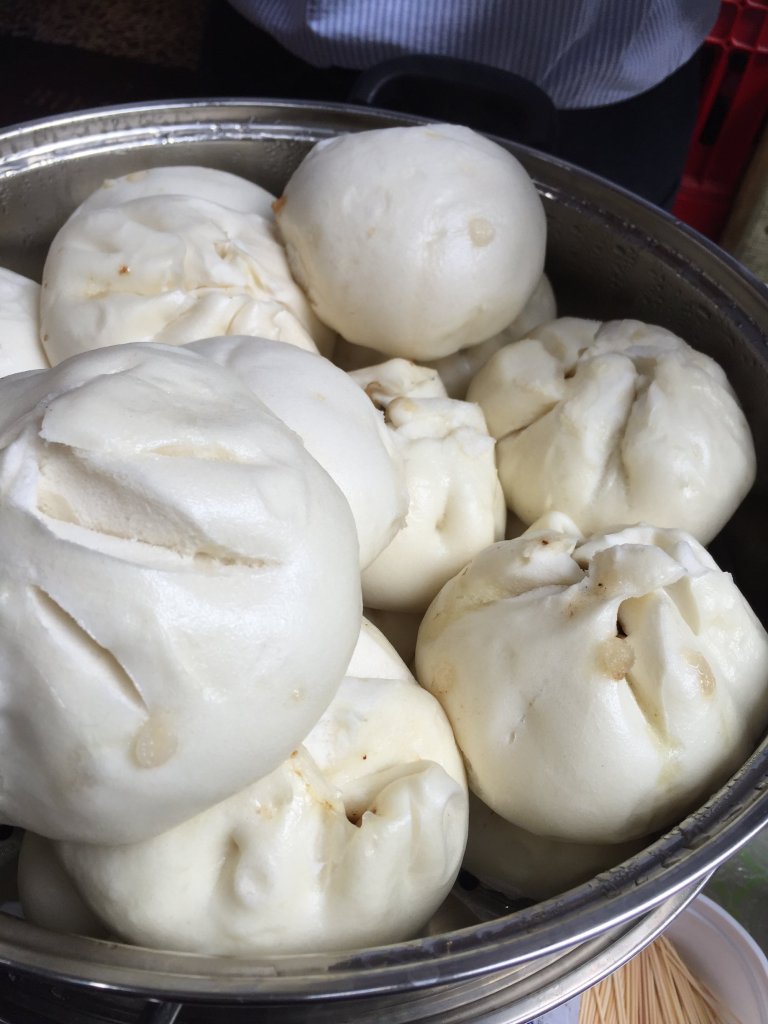
 One thing that I didn’t expect to stumble upon here was an organic/Italian bakery. But I did, right on the main street. They even have a grinder for fresh almond butter. It’s not a shop that I expected to find here.
 Sadly, I didn’t actually like their cake or gluten free cake, but I have to give them credit for trying. They also have other items so maybe those are better.
 Thankfully, I may have found my mani-pedi person here in Lima. Just as I left Bogota, I found