With a name like New World Mall, I had high(ish) hopes. Not sure why. I had read that one could get the famous Sichuan breakfast crepe/roll and the famous Xian “burger” all in one place.
Flaky Xian “burger”.
So I went.
Well, it is a huge mall with a grocery store. That’s a plus. The food court is in the basement. There are toilets. That’s a plus. Some of the food stands are extremely busy.
Breakfast wrap.
I had the breakfast wrap. Maybe I don’t get the hype. Maybe it’s me. I tried the Xian “burger” and it was good but not something I’d walk over ice (again) to get to.
Noodles and dumplings (those took 20 minutes or longer — seemed like foreva).
We sat at a table that was mysteriously available. Next to a woman who insulted us. It was awkward. Sort of. Mostly, I wished that she had not been so insulting. But there has to be room for all of us in this world.
So all in all, the hype is good advertisement. They got my money. So it worked.
For $95 per person, you get a whole lot of history and trivia about Chinatown Manhattan and New York City (what Chinese dish was invented in Manhattan? That sort of thing). Oh, and you get to eat at five different places.
Chinatown Manhattan
I won’t give away all the places on the food tour, but it was definitely worth it. We went with Ultimate Food Tours.
Steamed buns.
Our group had ten people and the tour took three hours. Along the way, our guide shared lore, etiquette (how to eat a soup dumpling properly!), and stories about the Chinese in America.
Soup dumplings.
The guide was awesome and he left without waiting for a tip!
It has been ten years since I left Bangladesh, but luckily I can once again taste the taste of home cooked authentic Bangladeshi food. Mahmuda is an excellent cook and she sells food from her home. You can also go to her place to experience a home cooked meal and learn about Bangladeshi culture. Mahmuda has a huge personality and speaks English with a feisty animated volume.
Bangladeshi food is spiced but not spicy as in hot on the Scoville scale. There is a lot of clove, cardamom, cinnamon, and mustard seed. There is regional food in Bangladesh and a whole type of cuisine, bhorta, that is sort of like “small plates, mezze, tapas, dim sum…” as in you get many small dishes and pay for what you eat. I hope that Mahmuda will make some of these in the future.
Shrimp in a coconut curry.
In Bangladesh, one eats with one’s right hand. I am not so good at that so I eat with a knife and fork. But you can try eating with your right hand if you want to. A meal at Mahmuda’s includes a starter, main, and dessert even though Bangladeshi food does not follow this concept.
The rice being cooked.
The curries in Bangladesh are not as soupy as they are in Britain or the US. Many of the Indian restaurants in the UK and the US are actually run by Bangladeshis. The Brits list curry —chicken tikka masala as their national dish. The first Indian cooks in the UK were from Sylhet in Bangladesh, in what was India. British curry with the heavy use of tomato puree and cream is an invention, probably in Glasgow, that helped adapt to the British love of gravy.
Dal, lentils.
I am not sure what the prices are but with a group, a meal was around $50 per person. One can also order food for pickup.
Oshwya Ghor translates to “home kitchen” in the local dialect of Barishal.
There was also dessert. The Bangladeshis love sweets but these were not too sweet. One was a rice pudding and the other a sort of blondie.
In a nod to Chinese/Asian new year (February 10, 2024), this article is about a Chinatown. The largest Chinatown is in Flushing, Queens, New York.
A sign in the dim sum house.
We went to eat good Chinese food and we went to Flushing to find it. It is a mere Subway ride (take the 7 from Midtown — also, you can pay by credit card at the Subway turnstile! No need for a ticket.) and get off at the Flushing-Main Street stop. Just down the street to Roosevelt and Prince streets, you will feel and hear the Chinatown atmosphere. Actually, the minute we got above ground, we heard people talking loudly in Mandarin Chinese. The smells made us realize that we were near some dumplings.
After doing some research, we decided (also because it was all last minute) to make our own food tour. There is a new mall called Tangram at the modern fancy end and then “hole in the wall” types of places like the famous White Bear. We headed for White Bear. The dumplings were good but can be had at other places for equal quality. The sauce was not spicy. Also, I felt a bit sad for the staff as they did not seem happy to have gained such fame.
White Bear is only take away. Dumplings with spicy sauce from White Bear.
We were only there for a short while and only had so many stomachs to fill so we ONLY managed to eat at four places in as many hours. After White Bear, we headed to a dim sum place called Nan Xiang Xiao Long Bao (as seen in the first photo at the top of the article). This place had the legit dumplings included their famous soup dumplings (xiao long bao).
Bamboo steamers.Multicolor dumplings are a modern take.
Luckily we got there before noon (yes, we already had the dumplings above before noon) so we only had to wait a few minutes for a table. This restaurant offered warm fresh soy milk which is apparently an authentic thing to have for breakfast. Warm soy milk and a cruller (deep fried dough).
Warm fresh soy milk and crullers is breakfast.The famous soup dumplings.
The soup dumplings were excellent although a touch too big for the spoon so there was no room on the spoon for the soup that ran out of the dumplings when poked with a chop stick. In some places in the world, the soup dumpling is so big that it is served with a straw. This is a gimmick. It is an amateur move to try and put the whole dumpling in one’s mouth. This is steamed dumpling and if you bite into it whole, it will explode like a magma filled volcano. I poked my dumpling over a bowl and drank the soup from there. There is a soy and ginger sauce for the soup dumpling but I loved the dumpling as it was. Inside was a lovely pork meatball juicy with soup.
Even here at Nan Xiang, there was some concession to being in the US. There were colorful dumplings made to please the eye, vegetarian dumplings, the scallion pancake made too sweet, and the cucumber salad not smashed (apparently the way I like Chinese cucumber salad is too garlicky — which is not authentic).
Notice our order ticket taped to our table?
As we ordered dishes, our ticket was taped to our table. Once we stopped ordering and had paid, we were told, gently, to leave, as there were long lines of people waiting for our table. So we left. But then went on to have dessert soup. I wrote about that in my article about my spirit starch. After a walk around Tangram mall, we went and had Peking Duck at Jiang Nan. Read about that in my article about that. It had gold leaf on it.
We ended our self made food tour of Mandarin Chinatown Flushing and headed back to Midtown New York. I do not think we ate anymore that day.
Oh, I tell a lie. We had boba tea. Which is a meal in of itself. More on that in another article.
I know that it is the general convention that dishes, food, is best tasted at the source. I think that does some disservice to the diaspora and fusion food that has evolved over the millennia. That said, here is a list of food that I often crave. Actually, for many of the dishes, I prefer in their newer form. But, then again… some I prefer at the source.
Ceviche — I like the classic old fashioned version. The Peruvians love fusion. They are a fusion and so is their food. So now one can find “warm ceviche” and ceviche not made with fish.
“Ceviche classico” with “leche de tigre” (tiger’s milk) making the fish turn white.
Danish hotdog — I prefer them in Denmark. The actual hotdog is special, the ketchup is different, the dog is served with crunchy fried onions… New York pizza — also, one of those things. Some say that the New York pizza is like a Neopolitan pizza from Naples, Italy. We shall see… Hamburger — Some of the best I’ve had are in the United States. American beef and lack of gristle in the mix. Banh mi — I’ve had good ones outside of Vietnam. Pho — Also, good in the certain parts of the United States. Very bland in other places. Korean BBQ — If one sticks to the pork belly, then it’s fairly easy to get good Korean barbecue in many countries. I think that many people think that bulgogi should be made with a high grade of beef and grilled at the table. Traditionally, bulgogi was created to use bad cuts of meat that required marinating. Usually the slices are so thin that grilling at the table dries them out. Some places use good cuts of steak and then one can dip them in sesame seed oil and salt. This is a delicious way to eat barbecue. Chicken wings — Oddly, some of the best barbecue wings I’ve had were in a pizzeria in New Mexico. Dim sum — can be good in many places outside China.
Laksa — so far the best I’ve had, and even some of the mediocre, was in Singapore and Malaysia. What can I say?
Most of all, the food of other lands transports you to them.
Folks told me that Lima’s Chinatown was not that exciting. I’m glad that people played it down. When I saw it for myself, I was pleasantly surprised.
Chinatown consists of a small pedestrian street with requisite arch and aura cleaners… and many shops and mini-malls in the surrounding streets. Chinatown is actually very close to Lima’s central square, the Plaza de Armas.
I was pleased to see that the Chinese stores also sold Thai curry paste and other rare items here in Peru.
In almost every shop, there were items that I did not recognize. That’s part of the fun of exploring.
Considering that the Chinese (mostly from Canton) got to Peru a bit after they got to California in the 1800s, in many ways, lots of Peruvian food is Chinese food. For example, the Peruvians love fried rice, “chaufa,” and eating Chinese food from a “chifa” is a normal part of life.
As I was checking out at one store, I noticed that a last minute “temptation” like chewing gum or candy, were snack packs of chicken feet (three, which I thought an odd number).
When I went a restaurant to get some fried rice and wanted to make sure that their recipe did not involve soy sauce, the owners of the restaurant TOLD me that I’d have it with soup (what is a meal without soup?) and they tried to teach me how to order “chaufa” without soy sauce. In Chinese.
Yup, that’s a thing here. The dim sum places serve “brunch” and it’s best to go fairly early in the morning — like at 7 a.m. or no later than 9.
The dim sum restaurants in Caracas have their own ordering system. There are no carts pushed by waiters here. Here you have to go up to a buffet and pick your items. The waiter will still notate it on a chit which you take to the cashier to pay. In addition to the usual items in a dim sum selection, they have a few local varieties of food. The pork is crispy and less red than in other places.
Next to the dim sum restaurants (I think there are two or three main ones), there is a Chinese market which only happens on Sundays. This is another reason to go eat dim sum on Sunday morning. The market has everything you could need to make Chinese food, from seafood, bean sprouts, instant noodles, to fresh tofu. The dim sum restaurants are in an area called “country club” near the river.
Oh, and another thing, there were a lot of chicken feet.
The world’s spices at the spice shop in the fruit and vegetable market.
Where to find the world’s products in Bogota? Recently, I went to Codabas, a market in the northern part of Bogota. It’s up on Carrera 7 # 180. Codabas has a central building with fruit stalls surrounded by a parking lot of shops.
Inside the central building is a spice shop with every spice you didn’t know that you couldn’t find in Bogota. Cardamom. Chili mix. Fresh honey. Salt from the moon. Okay, I jest.
Clean fruit and veg.
Some of the shops around the parking area include an Italian shop (they sell wine for less than 15,000 COP = $8 which is fairly cheap for Bogota) and other Italian items.
Frozen shumai dumplings.
I was thrilled by the “Arabic” sandwich shop where I bought pita bread. (All of it. I also bought hummus. But, mostly, I was excited to find flat bread like I’ve found in the middle east.)
Baba ganoush, hummus, labnah, and pita bread.
Across from there is a Peruvian store but it was a bit pricey.
Arabic cafe.
There were several fish shops which sold lots of frozen Asian seafood, like clams from Vietnam, and Asian foods (like frozen shumai dumplings). Plus, they sold a good brand (from Canada) of pickled herring. And squid ink. Just in case you were making squid ink pasta.
Pickled herring and squid ink.
I will go back to explore some more but personally for vegetables (and especially for chiles and napa cabbage) I like the less sterile feel of Paloquemao a little bit better. Also, the Carulla on Calle 84 actually caters to the expats and carries many imported products.


 Folks told me that Lima’s Chinatown was not that exciting. I’m glad that people played it down. When I saw it for myself, I was pleasantly surprised.
 Chinatown consists of a small pedestrian street with requisite arch and aura cleaners… and many shops and mini-malls in the surrounding streets. Chinatown is actually very close to Lima’s central square, the Plaza de Armas.
 I was pleased to see that the Chinese stores also sold Thai curry paste and other rare items here in Peru.
 In almost every shop, there were items that I did not recognize. That’s part of the fun of exploring.
 Considering that the Chinese (mostly from Canton) got to Peru a bit after they got to California in the 1800s, in many ways, lots of Peruvian food is Chinese food. For example, the Peruvians love fried rice, “chaufa,” and eating Chinese food from a “chifa” is a normal part of life.
 As I was checking out at one store, I noticed that a last minute “temptation” like chewing gum or candy, were snack packs of chicken feet (three, which I thought an odd number).
 When I went a restaurant to get some fried rice and wanted to make sure that their recipe did not involve soy sauce, the owners of the restaurant TOLD me that I’d have it with soup (what is a meal without soup?) and they tried to teach me how to order “chaufa” without soy sauce. In Chinese.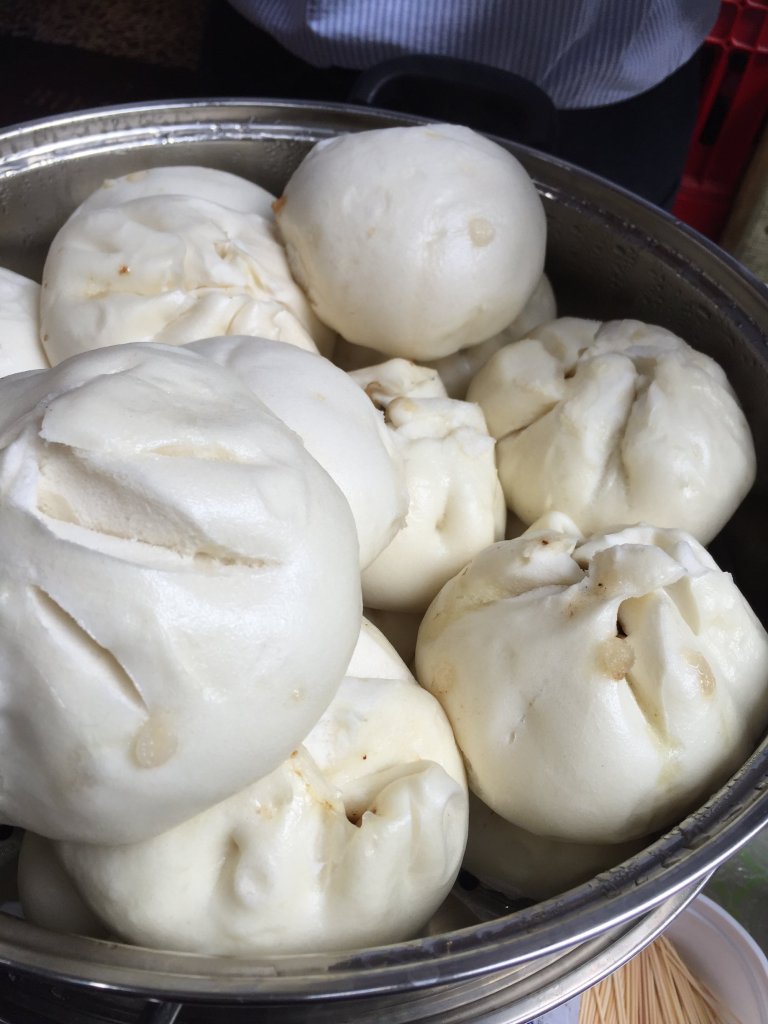
 Yup, that’s a thing here. The dim sum places serve “brunch” and it’s best to go fairly early in the morning — like at 7 a.m. or no later than 9.
 The dim sum restaurants in Caracas have their own ordering system. There are no carts pushed by waiters here. Here you have to go up to a buffet and pick your items. The waiter will still notate it on a chit which you take to the cashier to pay. In addition to the usual items in a dim sum selection, they have a few local varieties of food. The pork is crispy and less red than in other places.
 Next to the dim sum restaurants (I think there are two or three main ones), there is a Chinese market which only happens on Sundays. This is another reason to go eat dim sum on Sunday morning. The market has everything you could need to make Chinese food, from seafood, bean sprouts, instant noodles, to fresh tofu. The dim sum restaurants are in an area called “country club” near the river.
 Oh, and another thing, there were a lot of chicken feet.


