In a nod to Chinese/Asian new year (February 10, 2024), this article is about a Chinatown. The largest Chinatown is in Flushing, Queens, New York.

We went to eat good Chinese food and we went to Flushing to find it. It is a mere Subway ride (take the 7 from Midtown — also, you can pay by credit card at the Subway turnstile! No need for a ticket.) and get off at the Flushing-Main Street stop. Just down the street to Roosevelt and Prince streets, you will feel and hear the Chinatown atmosphere. Actually, the minute we got above ground, we heard people talking loudly in Mandarin Chinese. The smells made us realize that we were near some dumplings.


After doing some research, we decided (also because it was all last minute) to make our own food tour. There is a new mall called Tangram at the modern fancy end and then “hole in the wall” types of places like the famous White Bear. We headed for White Bear. The dumplings were good but can be had at other places for equal quality. The sauce was not spicy. Also, I felt a bit sad for the staff as they did not seem happy to have gained such fame.


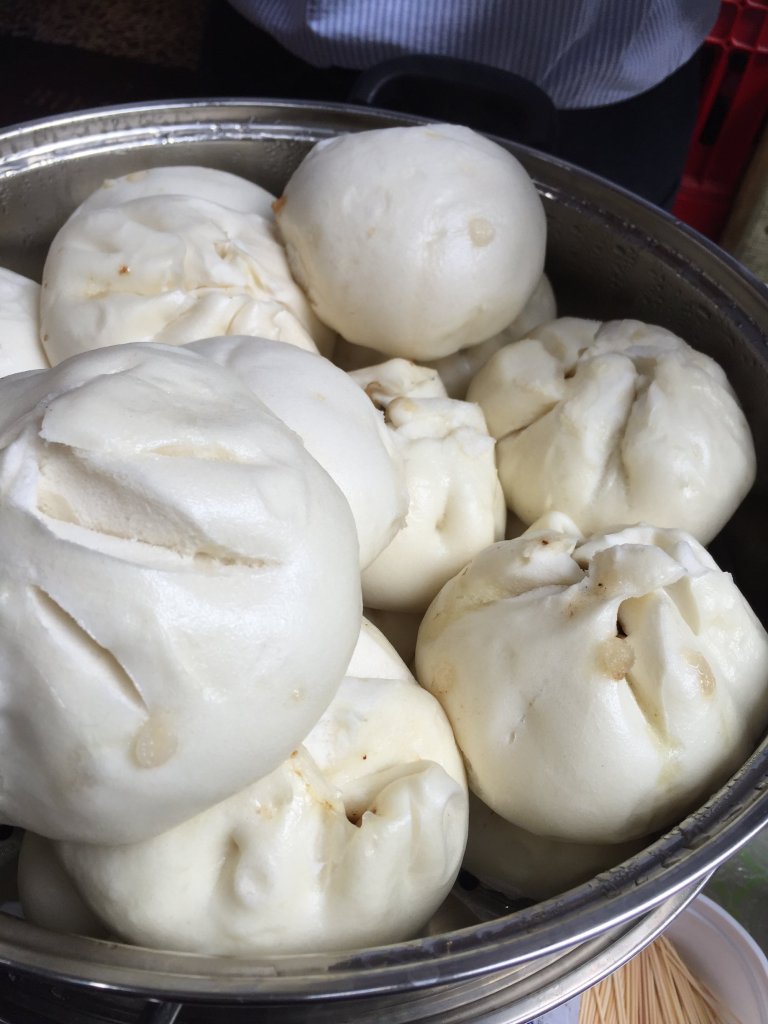
We were only there for a short while and only had so many stomachs to fill so we ONLY managed to eat at four places in as many hours. After White Bear, we headed to a dim sum place called Nan Xiang Xiao Long Bao (as seen in the first photo at the top of the article). This place had the legit dumplings included their famous soup dumplings (xiao long bao).


Luckily we got there before noon (yes, we already had the dumplings above before noon) so we only had to wait a few minutes for a table. This restaurant offered warm fresh soy milk which is apparently an authentic thing to have for breakfast. Warm soy milk and a cruller (deep fried dough).


The soup dumplings were excellent although a touch too big for the spoon so there was no room on the spoon for the soup that ran out of the dumplings when poked with a chop stick. In some places in the world, the soup dumpling is so big that it is served with a straw. This is a gimmick. It is an amateur move to try and put the whole dumpling in one’s mouth. This is steamed dumpling and if you bite into it whole, it will explode like a magma filled volcano. I poked my dumpling over a bowl and drank the soup from there. There is a soy and ginger sauce for the soup dumpling but I loved the dumpling as it was. Inside was a lovely pork meatball juicy with soup.


Even here at Nan Xiang, there was some concession to being in the US. There were colorful dumplings made to please the eye, vegetarian dumplings, the scallion pancake made too sweet, and the cucumber salad not smashed (apparently the way I like Chinese cucumber salad is too garlicky — which is not authentic).

As we ordered dishes, our ticket was taped to our table. Once we stopped ordering and had paid, we were told, gently, to leave, as there were long lines of people waiting for our table. So we left. But then went on to have dessert soup. I wrote about that in my article about my spirit starch. After a walk around Tangram mall, we went and had Peking Duck at Jiang Nan. Read about that in my article about that. It had gold leaf on it.
We ended our self made food tour of Mandarin Chinatown Flushing and headed back to Midtown New York. I do not think we ate anymore that day.
Oh, I tell a lie. We had boba tea. Which is a meal in of itself. More on that in another article.
 Folks told me that Lima’s Chinatown was not that exciting. I’m glad that people played it down. When I saw it for myself, I was pleasantly surprised.
 Chinatown consists of a small pedestrian street with requisite arch and aura cleaners… and many shops and mini-malls in the surrounding streets. Chinatown is actually very close to Lima’s central square, the Plaza de Armas.
 I was pleased to see that the Chinese stores also sold Thai curry paste and other rare items here in Peru.
 In almost every shop, there were items that I did not recognize. That’s part of the fun of exploring.
 Considering that the Chinese (mostly from Canton) got to Peru a bit after they got to California in the 1800s, in many ways, lots of Peruvian food is Chinese food. For example, the Peruvians love fried rice, “chaufa,” and eating Chinese food from a “chifa” is a normal part of life.
 As I was checking out at one store, I noticed that a last minute “temptation” like chewing gum or candy, were snack packs of chicken feet (three, which I thought an odd number).
 When I went a restaurant to get some fried rice and wanted to make sure that their recipe did not involve soy sauce, the owners of the restaurant TOLD me that I’d have it with soup (what is a meal without soup?) and they tried to teach me how to order “chaufa” without soy sauce. In Chinese.